
Leading A Risk Management Culture
Risk Management Framework
Retail banks use a combination of the Risk Management Framework (RMF), Risk Matrix, and the Three Lines of Defence (3LoD) model to systematically identify, assess, mitigate, and control risks. These tools help banks manage the diverse risks they face, including operational, credit, market, liquidity, and compliance risks, ensuring the financial stability of the organisation and regulatory compliance.
Risk Management Framework (RMF)
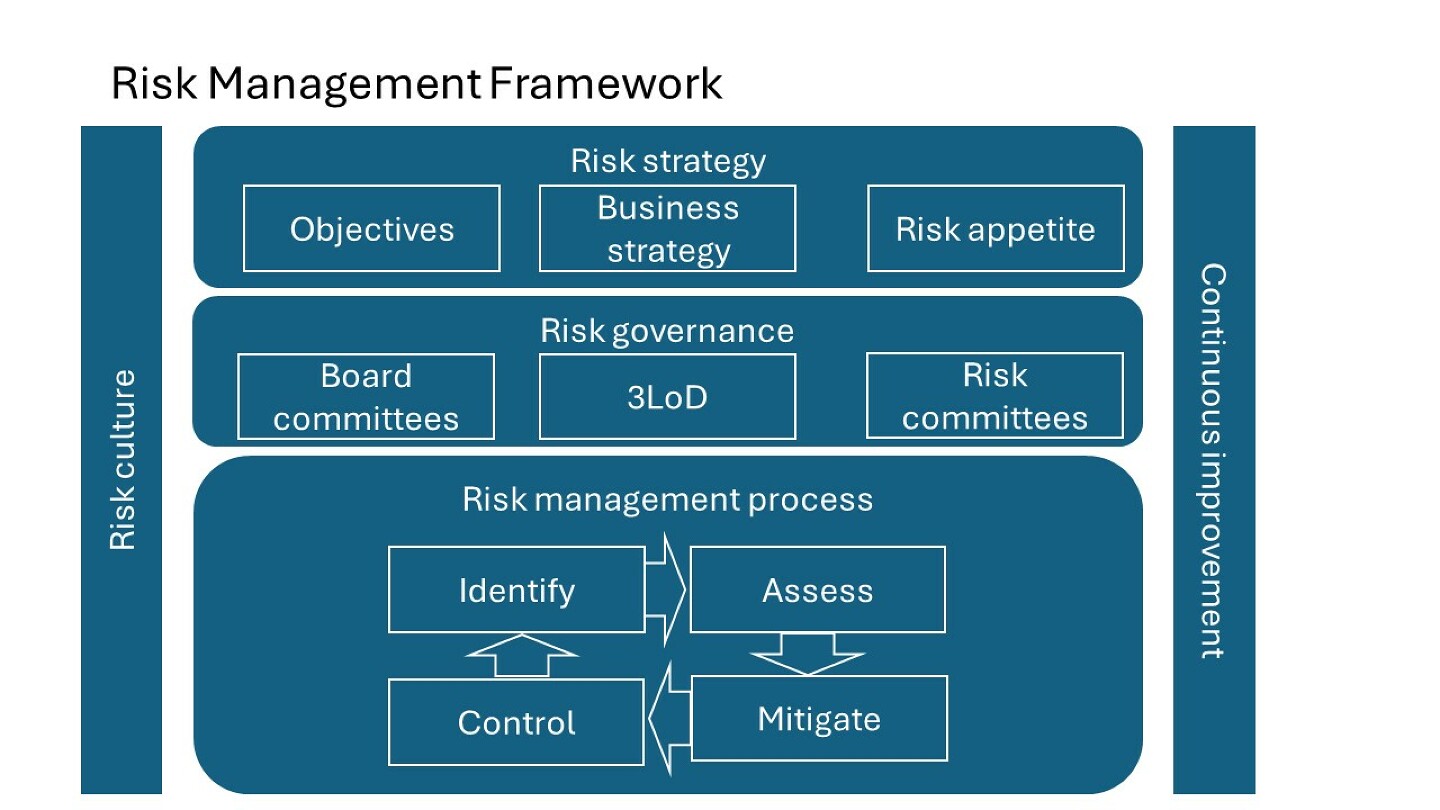
The Risk Management Framework (RMF) is a comprehensive approach that retail banks use to identify, assess, mitigate, and control risks across the organisation.
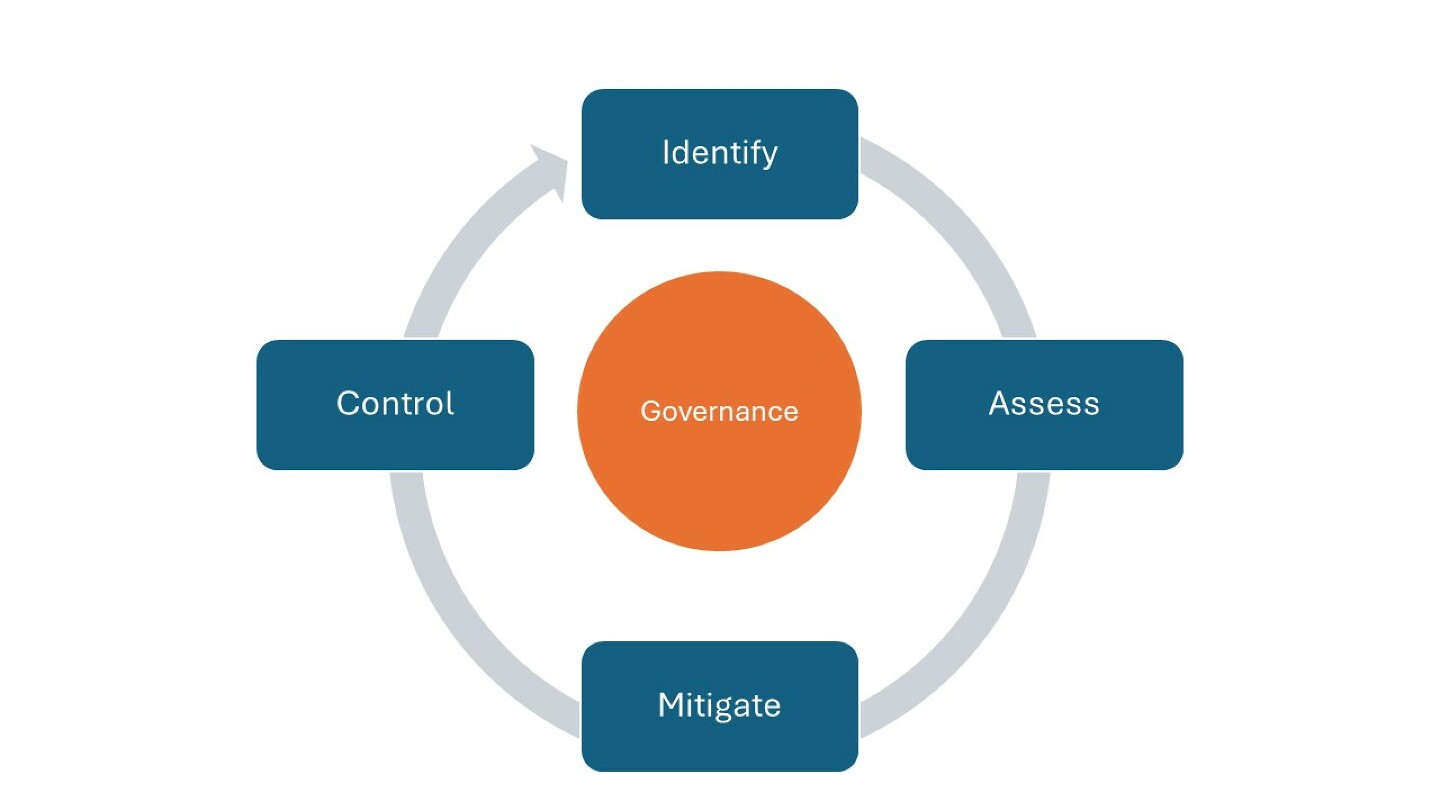
The first step in the RMF process is identifying risks. This is typically achieved through risk assessments, scenario analysis, and ensuring alignment with regulatory requirements. Banks may identify operational risks (such as fraud or system failures), credit risks (defaults on loans), market risks (fluctuations in asset prices), and compliance risks (violations of laws and regulations). Identifying these risks early on allows banks to understand potential vulnerabilities in their operations.
Once risks are identified, banks proceed to assess them. Risk assessments are conducted to determine the probability and potential impact of each risk event. Banks typically use both quantitative methods (such as statistical modelling and data analysis) and qualitative approaches (such as expert opinions or scenario planning). The goal is to understand how severe each risk could be and how likely it is to occur. For example, credit risk may be assessed by evaluating the creditworthiness of customers, while market risk may involve stress testing portfolios for price shocks.
After assessing risks, retail banks focus on mitigating them. The RMF outlines various risk mitigation strategies, such as diversifying investments to reduce market risk, setting credit limits to prevent excessive loan exposure, or implementing fraud detection systems to address operational risks. Mitigation strategies can also include hedging with financial instruments or implementing stronger internal controls. Additionally, risk mitigation involves the establishment of risk appetite and tolerance levels, defining the boundaries within which the bank is willing to operate.
Finally, control measures ensure that risk mitigation strategies are effectively implemented. Banks use continuous monitoring and internal audits to track risk exposure and the effectiveness of risk controls. Regular reviews and audits help ensure that risk management policies are followed and that corrective actions are taken when necessary. The RMF encourages a proactive approach, with a focus on continuous improvement and adaptability in response to new and emerging risks.
Risk Matrix
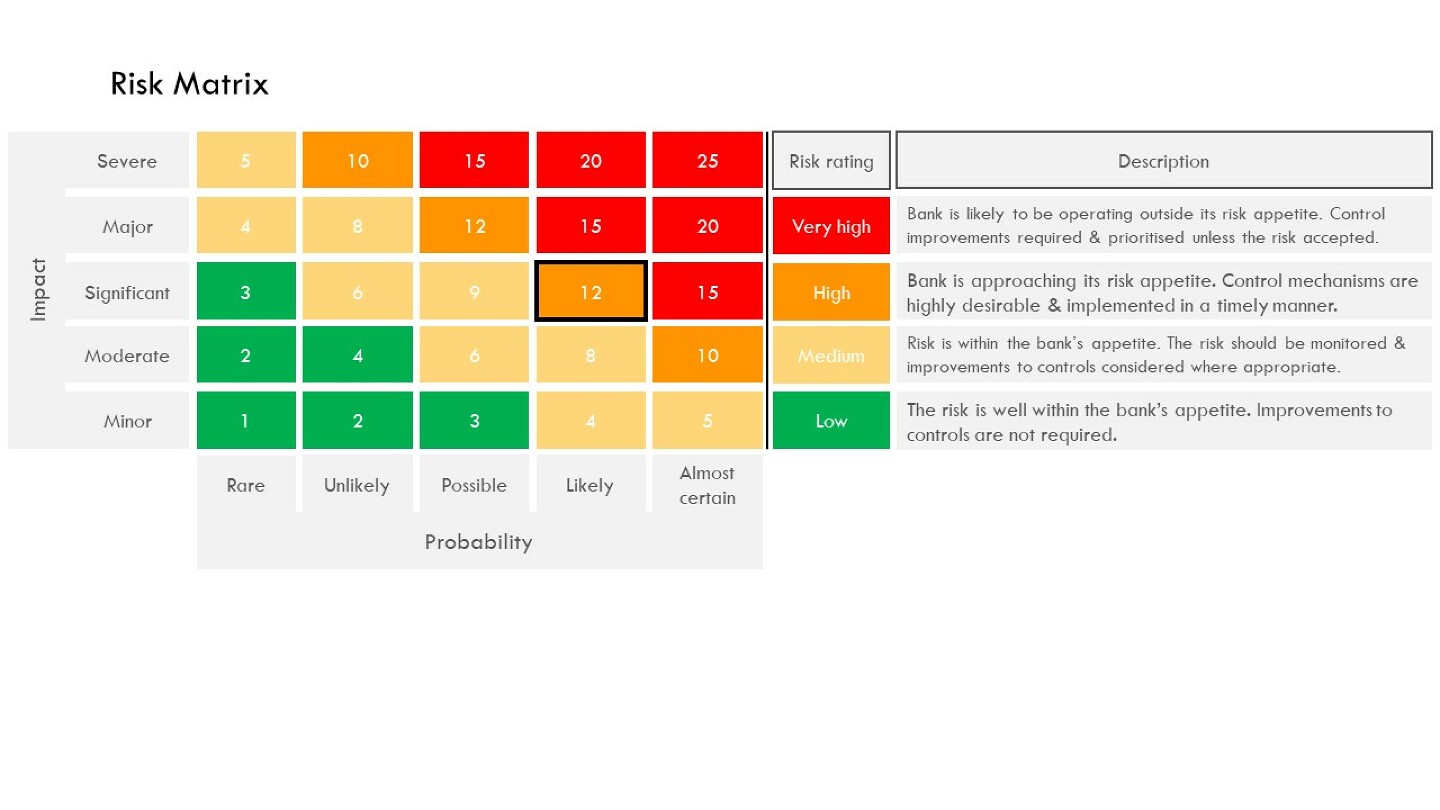
This is another vital tool used by retail banks to manage risks. It visually represents risks based on their likelihood and impact, helping banks prioritise which risks to action first. A typical risk matrix is a grid that categorises risks into levels such as low, medium, or high, depending on how probable they are and how severe their consequences could be. For example, a risk with a high probability of occurrence and severe impact, such as a cyberattack, would be categorised as high-risk, prompting immediate attention and mitigation efforts. In contrast, a low-impact, low-probability risk, such as minor operational disruptions, may be categorised as a lower priority.
The risk matrix helps banks assess the priority of each risk, ensuring that resources are allocated efficiently. High-priority risks, such as credit defaults or liquidity shortages, receive more focus, while lower-priority risks can be monitored over time. The matrix also helps in controlling risks, as it provides a clear visual representation of areas that require additional attention, ensuring that risk management efforts align with the bank's overall strategy.
Three Lines of Defence (3LoD)
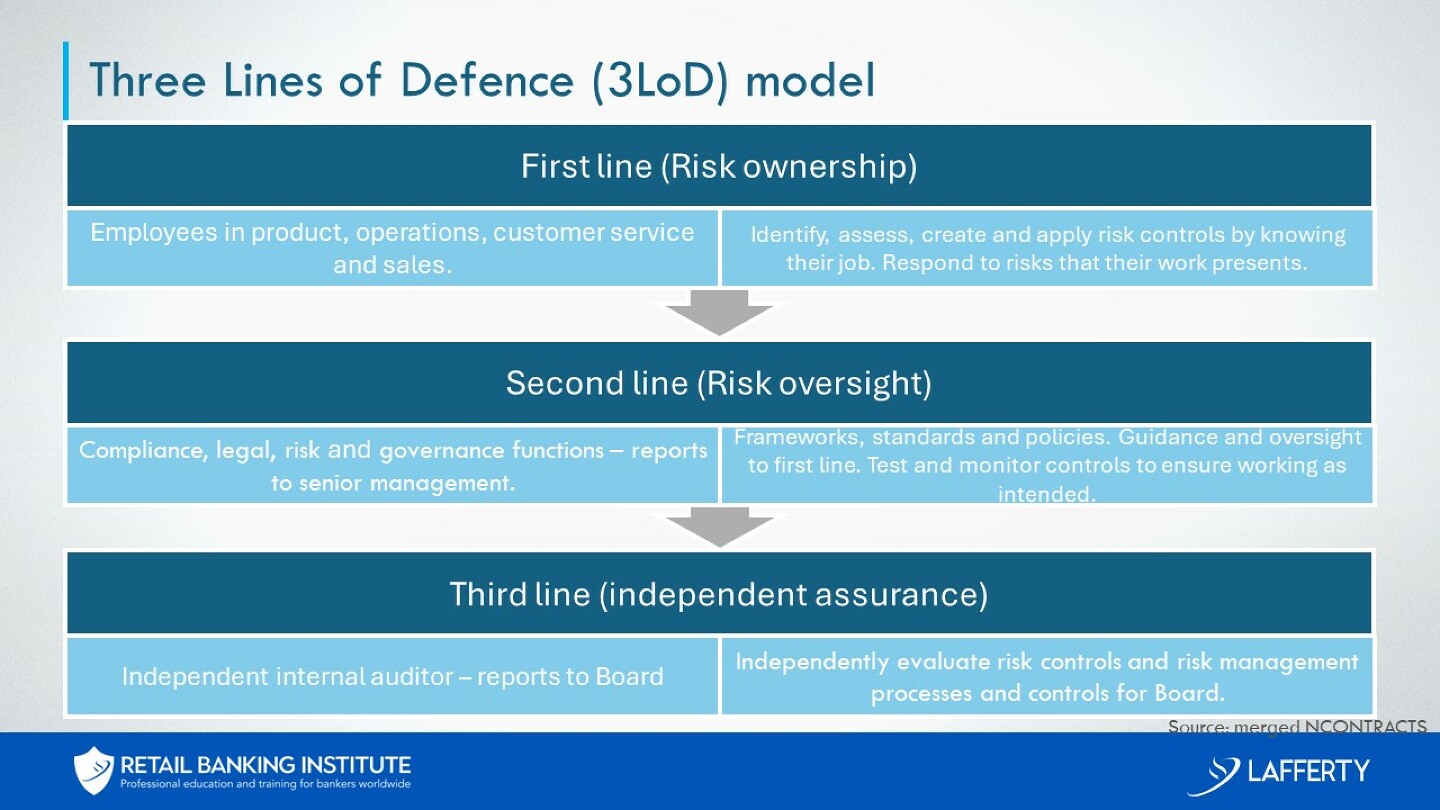
The 3LoD model is a governance structure that provides a clear and effective approach to managing risks at different levels of the bank. The first line 'risk ownership' consists of the operational management teams within the business units, who are responsible for identifying, assessing, and managing risks on a day-to-day basis. They implement internal controls, policies, and procedures to mitigate risks in real time. For example, front-line managers in retail banking branches monitor customer transactions to detect potential fraud.
The second line, 'risk oversight' involves the risk and compliance functions, which provide oversight and guidance. These teams support the first line by developing risk management frameworks, setting risk limits, and monitoring risk metrics. They ensure that the first line adheres to risk management policies and regulatory requirements. The second line also conducts risk assessments and reports on risk exposure, offering a more strategic view of the bank's risk profile.
The third line, 'independent assurance' involves internal audit (or sometimes external audit), acting as an independent body that evaluates the overall effectiveness of risk management processes. Internal auditors assess how well the first and second lines are managing risks and whether the bank's risk controls are functioning as intended. Their role is critical in providing assurance to senior management and regulators that the bank's risk management system is robust and compliant.
Together, these three lines of defence ensure that risks are identified, assessed, mitigated, and controlled at all levels of the organisation. The integrated approach provided by RMF, the risk matrix, and 3LoD helps retail banks effectively manage their risk exposure, adapt to changing conditions, and maintain financial stability.