
Leading A Risk Management Culture
Understanding and Managing Risks
Outlined below are the main types of risk that retail banks face that we discussed in detail in the Level I Affiliate 'Risk Management I – Foundation' module. Many of the risks are interconnected, because when one risk materialises another risk situation may also arise. For example, a large fraud will invariably trigger reputational and regulatory risks. This highlights the need for integrated risk management through robust governance frameworks, monitoring systems, and everyone's involvement.
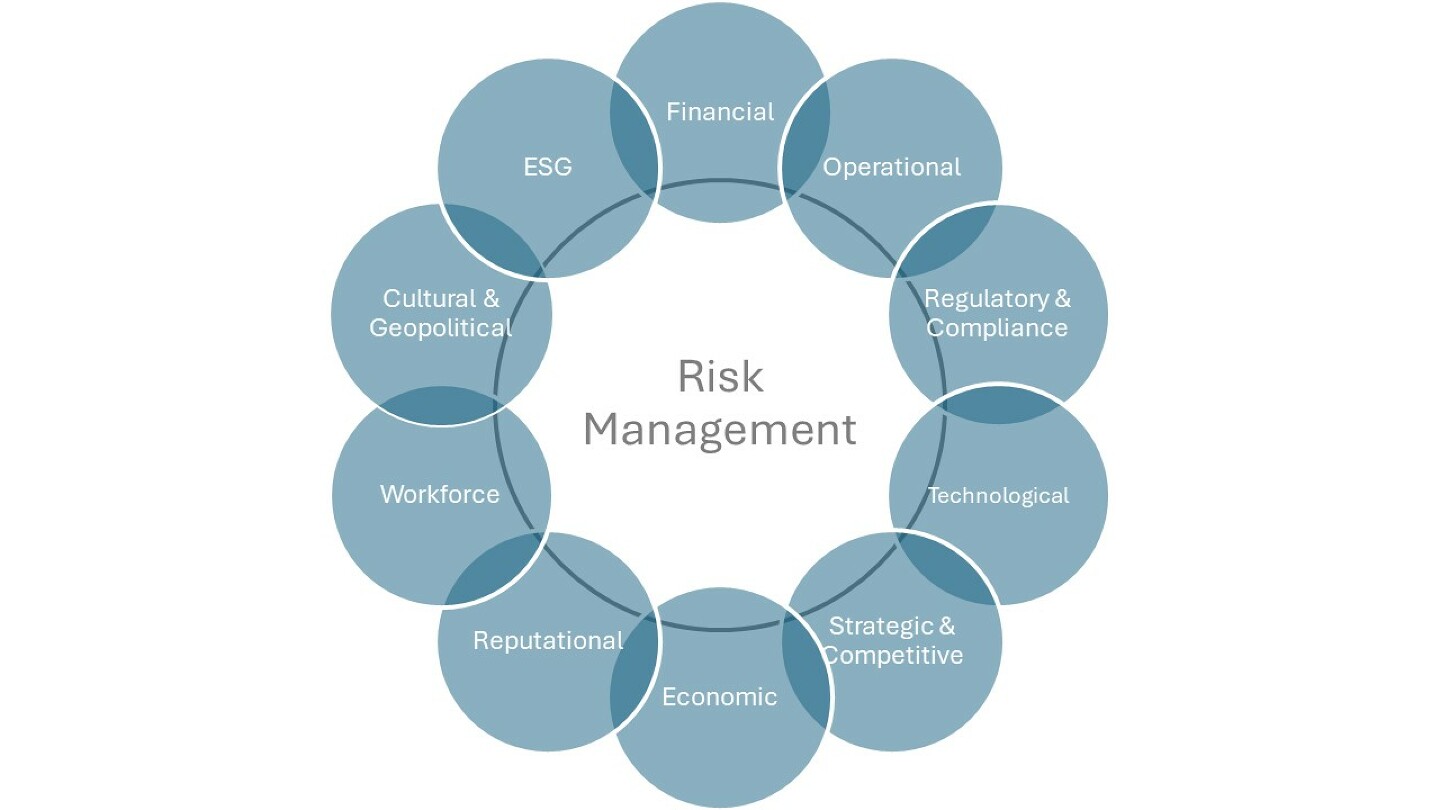
To effectively manage risks, retail banks must identify, assess, mitigate and control a wide range of threats including financial, operational, strategic, technological, reputational, workforce, geopolitical, and environmental risks. For senior leaders to embed risk management into their organisation's DNA, they must understand these risks in depth, implement robust risk governance frameworks, and promote a culture of accountability.
Some of the Key Risks
Financial and Credit Risks
Retail banks face financial risks that stem from lending money, liquidity management, and market volatility.
Credit risk, the risk of customers defaulting on loans, is one of the most significant threats to banks' profitability. Poor credit assessment or economic downturns can lead to increased non-performing loans (NPLs), weakening the bank's financial position.
Liquidity risk is another concern, as banks must ensure they have enough reserves to meet customer withdrawals and regulatory requirements.
Market risk, particularly fluctuations in interest rates and foreign exchange markets, can affect profitability and capital adequacy.
To mitigate financial risks, banks must implement rigorous credit assessment processes, maintain diversified loan portfolios, and stress-test their balance sheets against adverse economic conditions. Additionally, clear risk appetite frameworks should be established to guide lending and investment decisions.
The 'Asset and Liability Management' module provides an in-depth analysis of how senior leaders can manage liquidity risk and market risk.
Technological and Cybersecurity Risks
Banks' increasing reliance on technology, especially digital banking presents both opportunities and risks. Cybersecurity threats, including phishing attacks, data breaches, and ransomware, can compromise customer information and damage trust.
Legacy systems, if not updated, can create vulnerabilities and operational inefficiencies. Furthermore, the rise of agile fintech and neobanks has intensified competition, forcing traditional banks to accelerate their digital transformation.
Banks must prioritise investment in cybersecurity measures, such as encryption, multi-factor authentication (MFA), and regular penetration testing. Additionally, banks should modernise their IT infrastructure, leverage artificial intelligence (AI) for fraud detection, and adopt cloud-based solutions for resilience and efficiency.
Strategic and Competitive Risks
Retail banking is becoming increasingly competitive, with fintechs, neobanks, and large technology firms entering financial services. Customer expectations have evolved, with demand for efficient, personalised digital experiences and personal service at an all-time high. Failure to adapt to these changing demands can lead to erosion of trust and loss of the bank's most valuable customers.
Banks should focus on improving customer experience through innovation, including AI-driven customer data analytics, personalisation, and omnichannel service models. Agile business models and partnerships with fintechs can also help banks stay ahead of both traditional and disruptive competitors through rapid adaptation to customer needs, market changes, and technology through flexible, customer-centric operations.
Economic Risks
Banks operate in a broader macroeconomic environment that is subject to fluctuations outside of their control, for example rising interest rates set by their central bank to combat inflation. This can reduce loan demand and banks must adapt by shifting their focus on unaffected areas to maintain profitability.
Economic downturns, such as recessions or financial crises, also reduce loan demand, increase default rates, and squeeze profit margins. Pandemics and local health crises, as seen with COVID-19, can disrupt banking operations and significantly affect credit quality.
To mitigate economic risks, banks should build strong capital buffers, diversify revenue streams, and regularly conduct scenario planning exercises. Adjusting risk exposure based on economic indicators will ensure stability during financial downturns.
Reputational Risks
Trust is a core asset in retail banking. Negative publicity, whether due to unethical practices, regulatory breaches, or customer service failures, can severely damage a bank's brand. Social media often amplifies these issues, as customer complaints can go viral, damaging reputation and attract regulatory scrutiny.
In February 2020, Revolut faced significant backlash when its automated systems froze customer accounts due to suspected fraudulent activity. Affected customers expressed their frustrations on social media platforms like Twitter (X) and Reddit, sharing experiences of being unable to access their funds for extended periods. The complaints quickly gained traction, going viral and spreading rapidly, which put pressure on the company to respond quickly. These public complaints not only damaged Revolut's reputation but also attracted regulatory attention, highlighting the challenges fintech companies face in balancing security measures with customer service.
Proactive reputation management requires ethical banking practices, transparency in communication, and a robust crisis management plan. Banks should monitor social media channels and respond swiftly to customer concerns to prevent reputational harm. A good example is when Barclays Bank faced a significant IT glitch in 2021 that left some customers unable to access their accounts or perform transactions. Many affected customers took to social media platforms like Twitter (X) to voice their frustrations. Barclays quickly responded on social media by acknowledging the issue, providing updates on the resolution process, and offering apologies. Their prompt responses helped prevent the issue from spiralling further, showing how important it is for banks to stay active on social channels to address concerns in real-time and protect their reputation.
Workforce Risks
Talent management is becoming a critical issue for banks. Talent shortages, particularly in customer services, IT, and compliance, can hinder digital transformation and regulatory adherence. Additionally, banks now employ multiple generations including baby boomers, Gen X, Millennials, and Gen Z, each with different work expectations, technology comfort levels and communication styles.
These differences can lead to miscommunication, decreased productivity, losing key employees, and difficulty in encouraging a cohesive work culture, potentially impacting customer service and operational efficiency.
To address these risks, banks should invest in upskilling employees, offer competitive benefits, and create a culture of continuous learning. Flexible work arrangements and leadership development programs can also help improve employee retention and productivity.
Cultural and Geopolitical Risks
Retail banks operating in multiple countries face cross-border challenges related to regulatory differences, cultural expectations, and operational complexities. Political instability in emerging markets can lead to sudden changes in banking laws, capital flight, and increased credit risk. Sanctions and trade restrictions further complicate international banking, limiting access to certain markets.
HSBC must navigate cultural, geopolitical, and regulatory risks as a global bank operating in Asia, Europe, the Middle East, and the Americas. Political tensions and regulatory changes in Hong Kong, influenced by China, present ongoing challenges. And in the past, HSBC has faced multiple U.S. sanctions and regulatory actions, primarily related to money laundering, sanctions violations, and compliance failures. The most notable case was in 2012, when HSBC was fined $1.9 billion by U.S. authorities for failing to prevent money laundering by drug cartels and for violating U.S. sanctions. It entered into a five-year Deferred Prosecution Agreement (DPA) with the U.S. Department of Justice and forced HSBC to improve transaction monitoring, overhaul compliance, tighten controls, and align with international trade laws. Fines and reputational damage have prompted a cautious approach to high-risk markets.
Environmental, Social, and Governance (ESG) Risks
With increasing focus on sustainability, banks face rising pressure to integrate environmental considerations into their lending and investment strategies. Climate change risks, such as extreme weather events, can impact loan collateral and insurance costs. Social responsibility, including financial inclusion and diversity, is also a growing concern, and banks failing to align with ESG expectations increasingly risk reputational damage. Senior leaders should incorporate ESG principles into business strategies, promote green financing, and improve governance structures to ensure ethical leadership and decision-making. We discuss this in the 'Environmental, Societal and Governance Principles' module.