
Building A Modern Customer-Centric Digital Retail Bank
Analysing Traditional Retail Banks (2030 Opportunities and Threats Outlook)
Retail Banks are the Frogs in a Pot
Traditional retail banks are currently like frogs in a slowly heating pot, aware of fintechs, neobanks, telcos, and big tech, yet still believing they have their customers' loyalty. By 2030, the water will be boiling, as embedded finance, AI-driven lending, and digital wallets redefine banking, and customer loyalty evaporates. It may be too late to jump. Many frogs won't make it out.
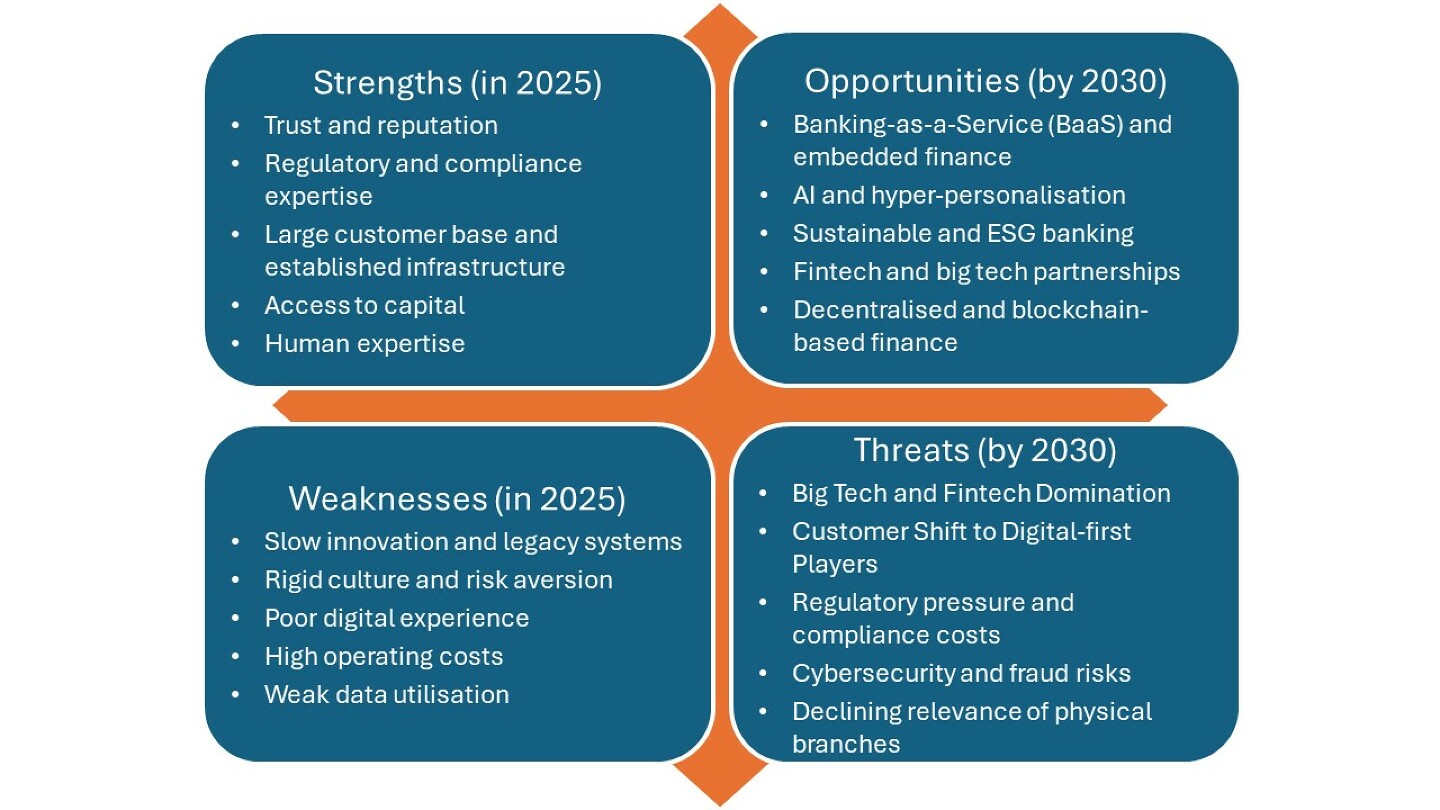
Strengths (currently)
Traditional banks maintain a strong advantage in trust and brand reputation, seen as secure, reliable, and well-regulated institutions. Their deep regulatory expertise helps them navigate complex compliance requirements better than fintechs. With large customer bases and extensive infrastructure, including branches and ATMs, they have a significant market presence, though neobanks' rapid growth challenges this dominance. Banks also benefit from strong balance sheets and deposit bases, enabling large-scale lending and investment. Additionally, human expertise, relationship managers and financial advisors, provides personalised guidance in areas like home loans and investments, offering a competitive edge over digital-only players that lack any human interaction.
Weaknesses
Traditional banks face slow innovation due to legacy systems and bureaucratic structures that hinder digital transformation. A rigid, risk-averse culture keeps them product-centric, lacking the agility fintechs embrace. Many still provide poor digital experiences, with mobile apps functioning as basic bank statements rather than financial management tools. High operating costs from expensive branch networks, outdated tech, and regulatory compliance add inefficiencies. Additionally, weak data utilisation limits AI-driven insights, predictive analytics, and personalisation, leaving banks behind fintechs and big tech. To stay competitive, banks must modernise their technology, embrace agility, enhance digital experiences, and leverage their vast store of data for customer-centric services.
Opportunities (2030 Focus)
Banking is shifting towards non-financial ecosystems such as e-commerce and social media, making BaaS and embedded finance essential for relevance. AI-driven hyper-personalisation will enable real-time financial coaching, predictive lending, and automated wealth management at scale. Sustainable and ESG banking will attract values-driven customers through green finance and ethical lending. While fintechs and big tech firms face regulatory hurdles, collaboration with traditional banks can drive innovation, improve customer experience, and expand digital offerings. Meanwhile, decentralised finance and blockchain-based solutions, including tokenisation, are inevitable, requiring banks to explore secure, transparent, and efficient applications of the technologies to remain competitive.
Threats (2030 Focus)
Big tech and fintech firms may integrate financial services, sidelining traditional banks in daily transactions. Younger generations favour digital-first players like fintechs, neobanks and embedded finance, increasing their lifetime value through seamless experiences and data-driven personalisation. Stricter regulations on data privacy, open banking, and ESG will drive up compliance costs. Meanwhile, cybersecurity threats and fraud risks will grow as banking digitises. Physical branches face declining relevance: unless transformed into advisory or digital-first hubs, their costs may become unsustainable. To stay competitive, banks must embrace digital transformation, enhance security, and rethink their customer engagement strategies in a rapidly evolving financial landscape.
Jump Now, or Get Cooked
To stay relevant by 2030, retail banks must act decisively. Legacy systems, rigid cultures, and weak digital experiences are slow-moving anchors: cut them loose. Customers demand AI-driven personalisation, seamless digital journeys, and embedded finance? Deliver or lose them to fintechs, telcos, and big tech. Trust is still a traditional bank's biggest asset, so don't waste it: lead with ethics, transparency, and financial well-being, not just products. Reinvent branches as advisory hubs, champion sustainable finance, and integrate blockchain for security and efficiency. The banks that put customers first, embrace AI, and lead in ethical finance will thrive. The rest? They'll be history.
How to Realise Strengths and Opportunities
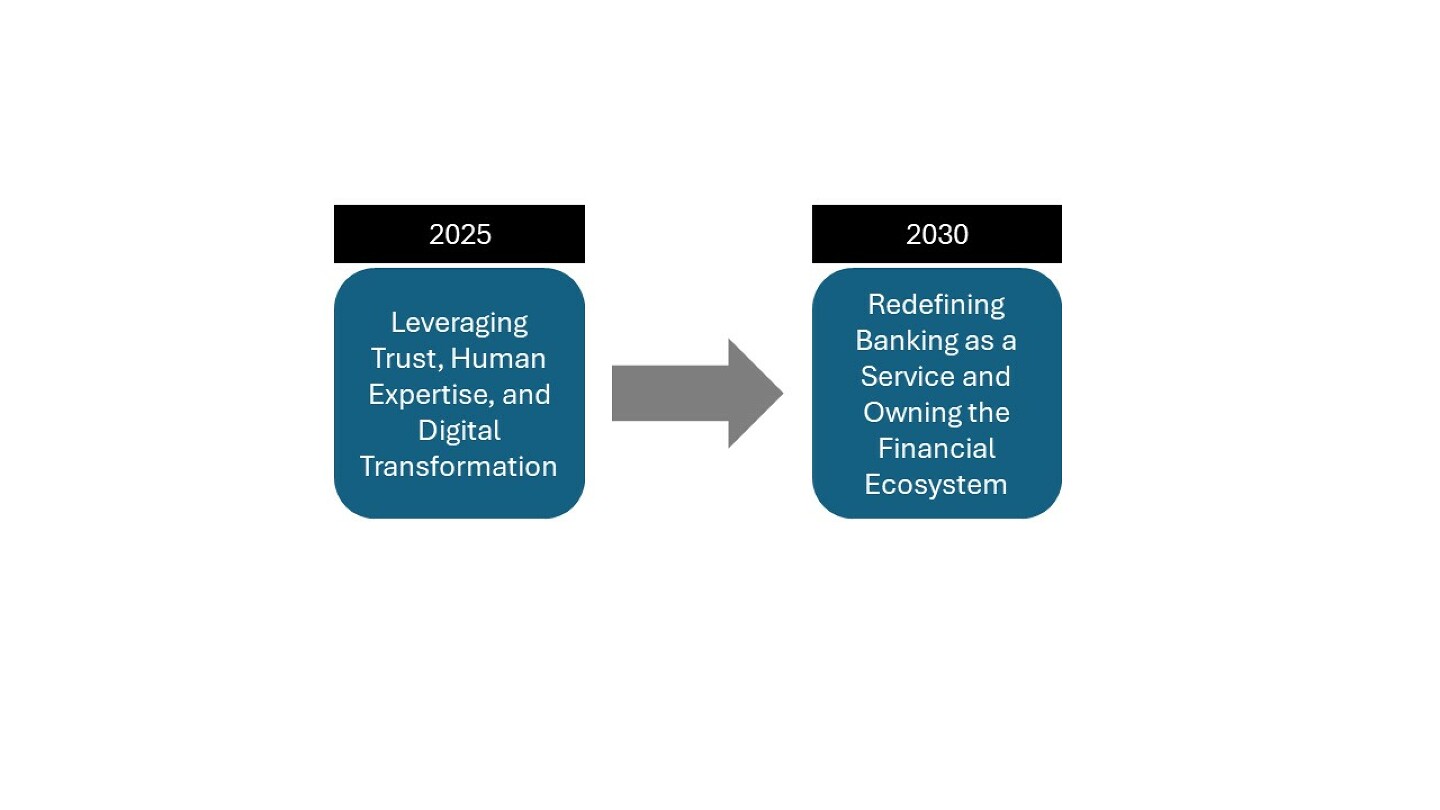
The Current Situation: Leveraging Trust, Human Expertise, and Digital Transformation
At the moment, traditional banks maintain a competitive edge through trust, regulatory expertise, and financial stability. To reinforce this, banks must highlight their transparency and reliability. Another advantage is human-led advisory services, offering personalised financial coaching and SME support that fintechs lack. By blending expert guidance with digital tools, banks can enhance customer satisfaction, trust and loyalty. However, to stay competitive, they must modernise legacy systems, adopt cloud-based, API-driven architectures, and improve agility to match fintechs' speed while maintaining regulatory strength.
2030: Redefining Banking in the Financial Ecosystem
By 2030, banking will be more integrated into digital ecosystems, with fintechs, telcos, and big tech leading in integrated payments, lending, and financial services. Traditional banks can stay competitive by adopting BaaS and embedding financial services into third-party platforms. This includes integrating lending into e-commerce, wealth management into lifestyle apps, and MSME banking into business software. To achieve this, banks must embrace open APIs, form fintech partnerships, and transition from a multichannel approach to a platform-based banking model. Traditional banks will remain trusted partners for life-stage financial services, sustainable financing, and values-driven banking if they transform. As ESG commitments grow in importance, banks must lead in providing green loans, impact investing, and financial inclusion programs to attract socially conscious consumers and businesses.
While AI and automation will handle routine tasks, human advisors must focus on high-value financial coaching and personalised services that deepen the relationship. High-net-worth individuals, MSMEs, and older customers will still prefer face-to-face guidance for complex financial decisions, reinforcing trust and customer loyalty. Banks that blend AI-driven insights with empathetic, relationship-based advisory services will maintain relevance.