
Digital Lending and Global Payments
Digital tools are helping the UK’s new digital banks to thrive in the SME lending business, as traditional banks have pulled back from the challenges of funding SMEs. But digital lenders such as Allica, OakNorth and Iwoca are prospering by being able to offer rapid credit decisions. “The neobanks which write SME loans have managed to win the race to break even quicker than direct-to-consumer fintechs, which have reported growing losses for many years longer,” notes the FT, adding that the British Business Bank estimates that digital lenders now provide 60 per cent of the funding to small business. “There has definitely been a case of a significant shift where market share has gone to challengers and fintechs over the past 15 years,” says Richard Davies, chief executive of Allica Bank.
Christopher Reice, chief executive of Iwoca, told the paper that the bank gets 40,000 to 50,000 loan applications each month. “There are millions of small businesses in the UK, in Germany, where we’re operating and... there is such a big group of SMEs that are so badly served or not served at all.” He said that Iwoca can process a loan application in under three minutes, with more than 80 per cent of its loan decisions being fully automated. Like most countries, the UK is largely run by small businesses that rely on credit.
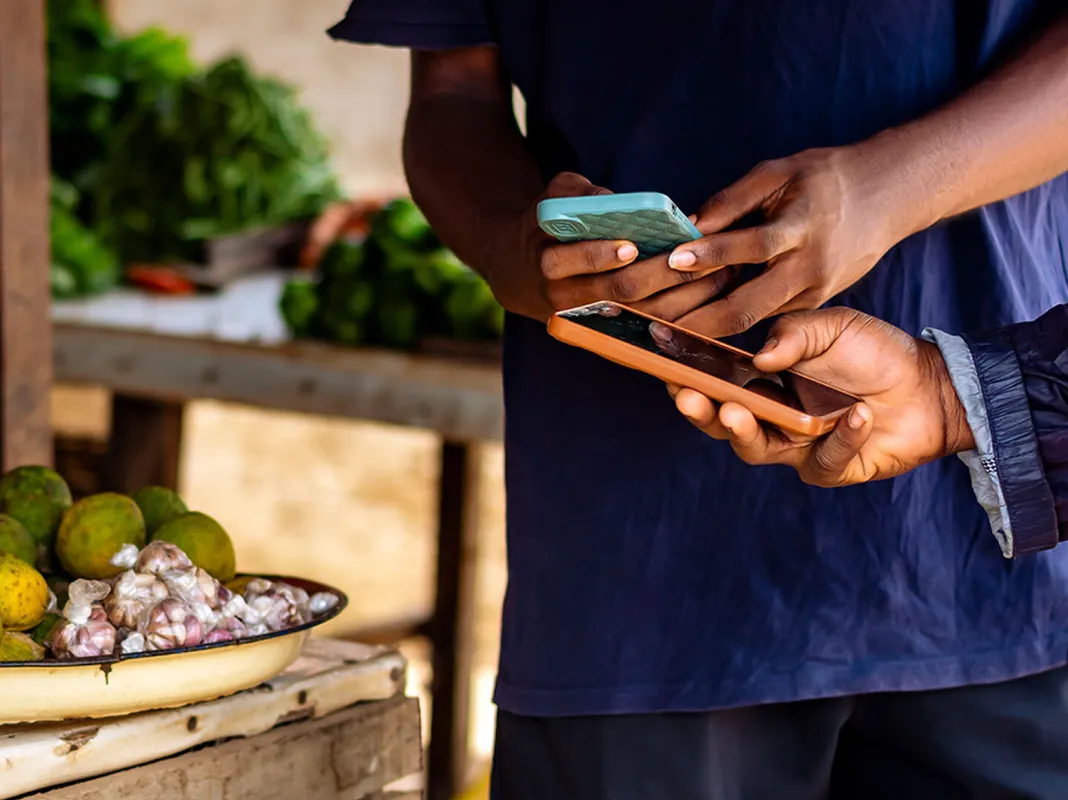
The Bank of Ghana is piloting digital cross border payments for wallets with an emphasis on extending the Pan African Payments and Settlement System (PAPSS) to mobile money users. At a conference this week, the bank’s governor Dr Johnson Asiama said the project involves testing interoperability between central bank digital currencies, stablecoins, traditional bank accounts and mobile money wallets. The governor observed that PAPPS to date has largely operated a bank-to-bank system, serving customer who are already banked, while most cross-border trade is driven by mobile money users. The pilot programmes focus on the Ghana-Rwanda and Ghana-Nigeria payment corridors. The initiative looks to build on existing payment rails rather than creating new systems, and the idea is to enable – for instance – a trader in Ghana to buy from a Nigerian supplier using a mobile wallet without converting funds into dollars. Dr Asiama noted that mobile wallets are already dominant in Ghana and Nigeria, making their integration fundamental. “The future of African payments will not be dominated by a single technology, and central banks should not determine which technology succeeds,” Dr Asiama told the event at a meeting of the 2026 International Monetary Fund in Bangkok. “Our role is to ensure that systems are safe, efficient, resilient and inclusive.”
Canadian bank Fairfax is buying into the Indian economy with a $6 billion deal to acquire a 60.7% stake in private sector lender IDBI. “The interest suggests robust appetite for financial services assets as the population of wealthy citizens expands and earnings of the middle-class rise,” reports Bloomberg. “These moves could signal further stake sales, strategic partnerships and capital-raising deals in the sector, analysts say. The dealmaking comes as (Prime Minister) Modi pushes for a banking system capable of supporting India’s transformation into a developed economy by 2047, with policymakers considering whether the country needs fewer but much larger state-run lenders. Still, such deals come with a string of challenges. IDBI Bank will need to sharpen its competitiveness against larger, better-capitalized private-sector lenders while investing in technology, customer acquisition and its branch network to sustain growth, according to analysts.”
OPay has secured a major investment of $185 million by Standard Bank ahead of a planned IPO as the Softbank-backed fintech has grown rapidly in its main market of Nigeria. “OPay’s revenue more than doubled to $806 million in the year through June, with the bulk coming from Nigeria, Africa’s most populous nation,” reports Bloomberg. “It also operates in Egypt, Pakistan and Indonesia. The additional capital will support OPay’s growth efforts in Africa and accelerate investments in its payments infrastructure. Standard Bank’s involvement in the deal shows the growing convergence between traditional lenders and fintech firms. Banks that once viewed digital challengers as competitors are seeking exposure to businesses that have become critical financial infrastructure across Africa.” OPay is likely to launch an IPO in New York followed by a secondary listing in Nigeria.
Meanwhile, Airtel Money raised £7 billion as it launched its IPO in London on Friday. “Airtel Money, founded as Airtel Africa's mobile money service, provides transfers, bill payments and digital banking features on mobile phones to users in 13 countries, including Kenya, Malawi and Tanzania,” reports Reuters. “London-listed Airtel Africa is majority owned by Indian conglomerate Bharti Enterprises. Airtel Africa owned nearly 78% of Airtel Money before the IPO and had said it would remain a long-term shareholder. Sunil Bharti Mittal, founder of Airtel and founder and chairman of Bharti Enterprises, said in a statement that the listing was a "vote of confidence in the UK as an attractive global destination for investment".
It appears that UK tech businesses have successfully lobbied to do away with non-compete clauses, pointing out that Silicon Valley companies have managed just fine – as California has banned non-compete clauses. The UK prime minister Andy Burnham said on Friday that he favours scaling back the law, using a football metaphor to say it was the business equivalent of the 1995 Bosman Ruling, which allowed soccer players to move freely at the end of their contracts.
“Burnham said in a speech in Manchester that he wants to ‘make sure that non-compete clauses will no longer be a barrier to hiring for our most promising start-ups and scaling firms’ — but did has yet to set out the extent of the crackdown.” But the City of London, heart of UK finance, has reacted angrily, claiming that its companies feel the law protects the competitiveness of UK financial and professional services.
A point of interest here is London-based Revolut, which says it has ambitions to develop beyond banking into a global tech company that can compete with the biggest US tech players. Revolut chief executive Nik Storonsky said last week that the bank had developed proprietary AI models trained on customer transaction data, using techniques similar to those underpinning large language models. "With 30 to 40 million transactions taking place every day on Revolut, we have a unique dataset to build on," he said at the Wave by Vento tech forum in Turin, adding that his long-term goal was for Revolut to reach a scale comparable with the biggest US technology companies.
Visa will set up card clearing operations in China, 14 years after the World Trade Organisation ruled against China’s de facto ban on foreign card players. In the meantime, there have been vast changes in the nature of payments, with Alipay and Tencent becoming major global players through their superapps and QR code payments. The two companies share 90 per cent of China’s mobile payments market and inspired the superapp trend that embeds payments into everyday life, starting with ecommerce and moving into daily payments.
“With the green light, Visa would become the first foreign card network to operate a wholly owned clearing business in mainland China,” writes the FT. “But its long wait means the company faces a dramatically changed market as QR code payments through Alipay and WeChat Pay dominate everyday transactions.” The approval comes ahead of a meeting between US president Donald Trump and Chinese president Xi Jinping, and is seen a goodwill gesture by China. The presidents will meet next month at the Asia-Pacific Economic Co-Operation forum in Shenzhen.
Lafferty Group
Contact Us
enquiries@lafferty.com
caroline.hastings@lafferty.com
The Leeson Enterprise Centre
Altamont Street
Westport, Co. Mayo
Ireland
F28 ET85