
Digital Currencies, Credit Controls and Financial Stability
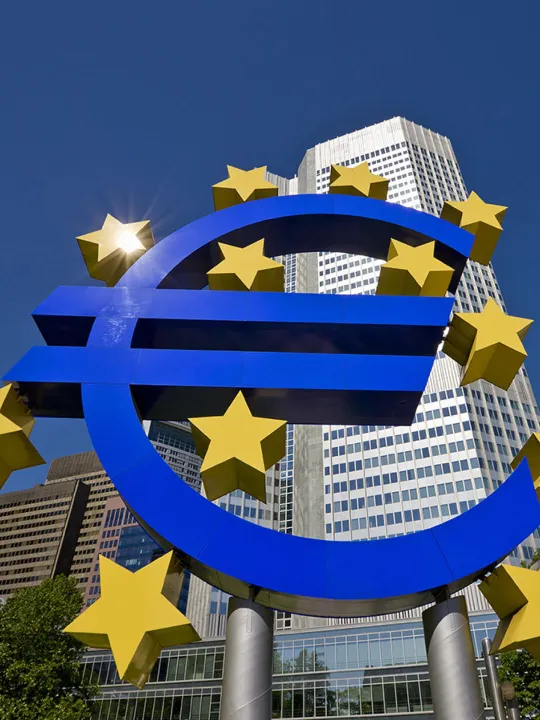
The digital euro will be one of the big stories of 2026, unless some big credit card business manages to shoot to prominence in Europe, where the US networks dominate card payments and credit cards in particular. (Thirteen European countries rely entirely on US networks.) Tridios Bank, a regular award winner in the ethical banking category, is an outlier among private banks in calling for a digital euro. While the project is popular with central banks, it’s unpopular with private banks, who worry that EU citizens will spend their money acquiring and using the digital euro rather than leave it sitting in deposit accounts. “Today, most digital money exists as private money, created and managed by commercial banks and payment providers rather than by public institutions,” said Tridios Bank economist Hans Stegeman.
“A digital euro can restore the disbalance where private financial institutions dominate money creation and payment systems, prioritising profit, while public interests such as financial stability, inclusivity, and sustainability have limited influence. With a digital euro people are given a truly risk-free option for storing their money, making depositing money in a bank a conscious choice rather than an automatic default. If properly organised, this can make the financial sector both more resilient and more diverse. Especially as a bank we would like to emphasise that with the right design choices, a public digital euro would not necessarily threaten financial stability. And instead, provide an important step to restore the balance between private profits and public interests so the financial system better serves society.’”
Credit card rates at 10 per cent and interest rates at 1 per cent? Donald Trump has a vision for private and public interest rates that’s putting him at odds with US banks and the Federal Reserve. US president Donald Trump used his Truth Social platform this weekend to call for a one-year cap on credit card interest rates of 10 per cent, saying “we will no longer let the American Public be ‘ripped off’ by Credit Card Companies that are charging Interest Rates of 20 to 30%, and even more, which festered unimpeded during the Sleepy Joe Biden Administration. AFFORDABILITY!” The proposal was one of Trump’s campaign promises. “About 195 million people in the United States had credit cards in 2024 and were assessed $160 billion in interest charges, the Consumer Financial Protection Bureau says,” according to Associated Press. “Americans are now carrying more credit card debt than ever, to the tune of about $1.23 trillion, according to figures from the New York Federal Reserve for the third quarter last year.”
Capital One shares dropped 6 per cent on Monday and Amex was down 4 per cent. Bank groups said the move would force less well-off Americans to seek alternative and less regulated sources of credit. Airlines have already declared themselves opposed to any cuts as they rely on co-branded credit cards. (One senator said airlines are basically credit card companies that own some planes.) Mr Trump finds himself on the same page as democratic socialist senator Bernie Sanders, who is also pushing the 10 percent scheme, and the Consumer Financial Protection Bureau. Bank shares fell on Monday after the announcement. Wall Street analysts are sceptical that the change will happen without legislation: witness the 20-year US court case between merchants and card schemes over fractions of percentage points. Historians believe that one of the things that swung the US election for Ronald Reagan in 1980 was Jimmy Carter’s attempt to reign in credit cards.
Africa’s largest fintech Flutterwave got even bigger over the holidays as it added open banking business Mono in an all-stock acquisition. “Mono emerged as a significant player in Nigeria’s fintech industry, enabling businesses to securely access customer financial data for better credit decisions, as well as faster onboarding, fraud reduction, and seamless payments,” reports Bloomberg. “Flutterwave is counting on Mono’s technology to harness broader payment opportunities expected from the recapitalization of Nigeria’s banking industry, which is expected to accelerate lending, trade and e-commerce,” said chief executive Olugbenga Agboola. “We are the rail that carries the flow of transactions across the country and across Africa, and part of what we have done by acquiring Mono is to deepen that rail. If an IPO knocks, that makes it even easier,” he added, declining to provide a timeline for the move, reports Business Day Nigeria. Mono’s chief executive Abdulhamid Hassan said the deal was a strategic response to the shifting financial landscape. “Africa is entering a credit-driven phase, as governments push lending-led financial inclusion,” he said. “If the economy is going to be credit-driven, you need deep data intelligence to understand how people earn and spend. At the same time, regulators need to be confident that customer funds and data are safe.” He said that nearly all of Nigeria’s digital lenders relied on Mono’s infrastructure.
The harbinger for the current unrest in Iran and what looks like the imminent collapse of the regime was the collapse last year of a bank run by cronies of the regime, which saddled the government with billions in losses. “Late last year, Ayandeh Bank, run by regime cronies and saddled with nearly $5 billion in losses on a pile of bad loans, went bust,” reports the Wall Street Journal. “The government folded the carcass into a state bank and printed a massive amount of money to try to paper over all the red ink. That buried the problem but didn’t solve it. Instead, the failure became both a symbol and an accelerant of an economic unraveling that ultimately triggered the protests that now pose the most significant threat to the regime since the founding of the Islamic Republic half a century ago. The bank’s collapse made clear that the Iranian financial system, under strain from years of sanctions, bad lending and reliance on inflationary printed money, had become increasingly insolvent and illiquid. Five other banks are thought to be similarly weak.”
Ayandeh Bank was established in 2013 by Ali Ansari, who created the bank by folding two state-owned banks into a bank he had previously founded. Ayandeh Bank offered the highest interest rates, attracting deposits from millions of people. But US sanctions in 2018 reduced the flow of dollars into Iran, and last year the UK sanctioned Ansari. An example of the bank’s self-dealing was the vast Iran Mall, opened in 2018, with the bank lending to its own businesses. A supervisor at the central bank described Ayandeh Bank as a ponzi scheme, and dissolved the bank last year, folding its debts into state-owned Bank Melli. The government printed money to cover the growing losses, but the rial collapsed against the dollar, hitting imports and staple goods. When merchants, not known to lead protests, came out onto the streets, it signalled the impact not only on the poor but on the middle classes – with even the uptown people joining protests.
Lafferty Group
Contact Us
enquiries@lafferty.com
caroline.hastings@lafferty.com
The Leeson Enterprise Centre
Altamont Street
Westport, Co. Mayo
Ireland
F28 ET85