
US Branch Growth and Global Payments Reform
The Branch Lives !
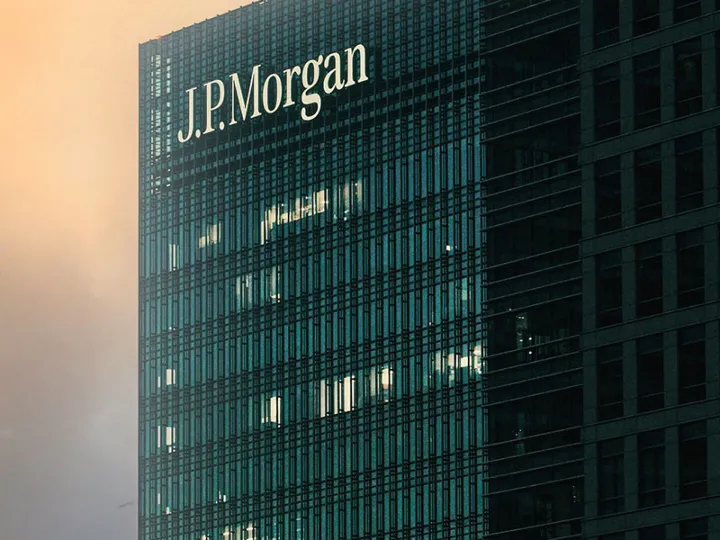
US retail banks are strongly committed to building more branches as a way of attracting and retaining deposits. While in countries such as the UK, branches are seen as legacy costs, US banks see them as strategic assets, and places to interact with customers and offer standard services alongside advisory services. “JPMorgan Chase aims to open more than 160 branches in more than 30 states in 2026, part of a multibillion-dollar investment into its brick-and-mortar network that reflects a broader bet by US banks on Americans’ enduring fondness for in-person banking,” reports the FT.
Chase is aiming to hold 15 per cent of all US consumer deposits. Jennifer Roberts, chief executive of consumer banking at Chase, said the branch building strategy is key to the bank’s ambition. “JPMorgan aims for newly opened branches to be profitable within four years, Roberts said, and is achieving that goal ‘months’ faster than planned thanks to growth in deposits, card customers and wealth management clients at the retail locations.”
That hasn’t stopped JPMorgan Chase from huge investments in digital banking services. In the UK, for instance, Chase operates purely as a digital bank but has recently topped customer satisfaction awards. Research by US banks shows that customers, even those who open an account online, prefer to give their custom to a bank that has a physical location nearby. “They want it because of safety and soundness,” said Mike Abbott, Accenture’s global head of banking and capital markets. “A branch in many people’s minds represents the place where your money is.”
Even the UK is now worried about Visa and Mastercard
Visa and Mastercard might be the great cards duopoly but it doesn’t make them friends. A case in point: the Winter Olympics, where strange sports such as sliding head first down an ice tunnel on a dinner tray come out into the open every four years. Visa is the sponsor, so it’s that or cash, but staff will sell you a prepaid Visa card on the spot. And that’s giving consumers a taste of the dilemma facing policymakers. It’s mostly been the EU worrying that the US might, for example, order Visa and Mastercard to cut off services in Europe if Denmark doesn’t hand over Greenland, but now even the UK is getting worried that its former best friend forever might use financial muscle for policy ends.
News emerges this week that the UK is accelerating a long-mooted payment scheme that provides an alternative to the dominant Visa and Mastercard schemes. “UK banks are working on a new national payments platform meant to handle roughly the 50 billion transactions processed annually in Britain, which today overwhelmingly run on Visa and Mastercard rails,” reports Credit and Collection News.“The project, internally called DeliveryCo, has been under discussion for years but is now being pushed forward, with an ‘emergency summit’ of bank chiefs convening to define governance, funding and technical design. UK Finance is coordinating industry efforts, while the Bank of England is steering work on the underlying ‘next generation’ retail payments infrastructure via a Retail Payments Infrastructure Board.” It’s understood that investors in the new network will include Visa and Mastercard, and the LINK network (formerly Vocalink), which was acquired in 2016 by …Mastercard.
Thailand’s Digital Banking Future
A company owned by Thailand’s richest man Sarath Ratanavadi has doubled its stake in Kasikornbank to become its largest shareholder. “Gulf increased its holding of Kasikornbank by 116 million shares to about 10% from 5% in its previous filing in October, according to a Securities and Exchange Commission statement on Friday,” writes Bloomberg. “The power producer and telecommunication company had ranked fourth with a 4.53% stake as of Sept. 11, when the lender published its top shareholder list.” Gulf is the owner of Advanced Info Services, a mobile operator that last year won one of Thailand’s new virtual digital banking licences.
The other licences were won by the SCB X (Siam Commercial Bank) consortium that includes China’s WeBank and South Korea’s Kakaobank, and the other by the Chearavanont-family controlled CP Group, which has already backed the Ascend Money fintech. Sarath’s group, spanning banking, energy and telecommunications, has become the country’s leading power producer, and is now poised to invest in data centre development in Thailand. Thailand’s neighbours including Singapore pioneered new approaches to digital banking licences by inviting consortiums including fintechs and telcos to apply for new licences with a goal of driving financial inclusion and more lending to small businesses.
The Art of Collateral
Would you consider art an asset? Bank of America is among the major banks that are now offering art consulting services to wealthy clients. “Consulting firm Deloitte estimated in its latest annual report on the art market that ultra-high net worth clients held around US$2.56 trillion in art in 2024, and that figure could reach $3.5 trillion by 2030,” reports Reuters. “Banks and family offices expect that around one third of those art works may be transferred to younger generations over the next decade.”
Art is not see as an asset class in client investment portfolios, but as property that can be used as collateral for loans. An executive told Reuters that Bank of America has one of the largest art-based loans portfolios and clients use the service to avoid the need to sell art to fund liquidity needs. Drew Watson, Bank of America's head of art services, said that changing tastes and the emergence of new collectors had increased the need for the service. “BofA has one of the largest art-based credit portfolios, and the new art consultancy service will help clients chose art according to their taste, but also eyeing the potential for increasing value, he said.”
As World Liberty Financial convened a major crypto event in Mar A Lago, we wondered what the Bank of America experts advise clients regarding the crypto version of art (aka NFTs) as collateral for loans? We’ve seen a few celebrities lamenting their purchase of six-figure digital animations. A Crypto Punk NFT sold for $7.57 million, and an NFT collage by the artist Beeple fetched $69 million at auction at Christies of London in 2021. One Bored Ape Yacht Club NFT sold for $2.9 million, but the total sales from the Bored Ape series reached over $4 billion.
Lafferty Group
Contact Us
enquiries@lafferty.com
caroline.hastings@lafferty.com
The Leeson Enterprise Centre
Altamont Street
Westport, Co. Mayo
Ireland
F28 ET85