
When payments become invisible
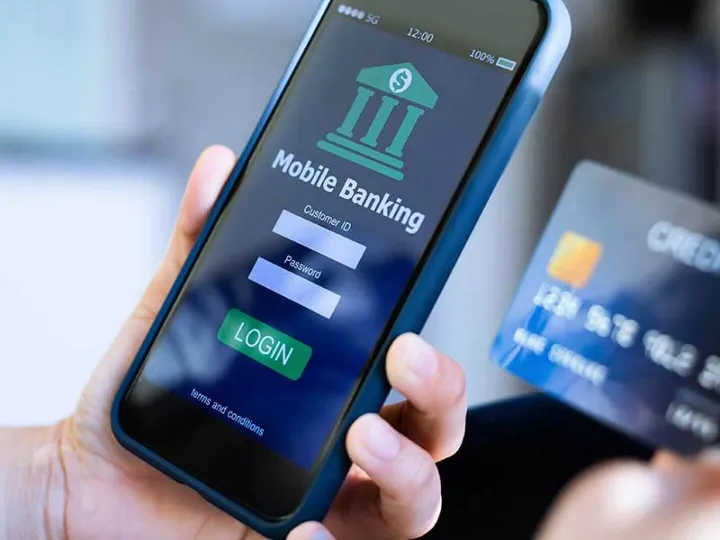
Korea shows the way to Face Pay
Toss, a South Korean payment app that substitutes the user’s face for a card, has signed up 10 per cent of the population and says it hopes to eliminate physical cards entirely. Over half of the country’s population already use the payment app, and close to 5 million people have signed up for the facial recognition service. South Korea is advanced in replacing cash with electronic payments, with biometrics playing a large role in the form of facial recognition, already familiar to South Koreans as the method of entry to concerts and sporting occasions. “Even taking a card out of my wallet is a hassle,” said Park Eun-ha, a 31-year-old beauty product developer who uses FacePay. Kim Sang-hyeok, a café owner in Seoul, said about 10 per cent of his customers, “mostly in their mid-twenties to early thirties”, used the service. “The biggest benefit is that we don’t need extra staff for payments.” And Toss isn’t the only player. Alibaba and Tencent offer facial payment to a smaller extent. “Competition at home is intensifying,” reports the FT. “Naver, South Korea’s dominant search engine, offers its own facial-recognition payment service but on a smaller scale. ‘Consumers love the convenience, but there are still psychological barriers,’ said Jeon Jaeyeon, a Naver Pay spokesperson. ‘Those barriers may fall as people encounter the technology more often’.”
While experts say that Koreans are prepared to sacrifice some privacy for convenience, the technology is becoming well-established elsewhere: many airports now offer biometric scanning, attracting new users from those who don’t want to stand in line waiting to be examined by a human.
AI can’t trade – yet
Wealth management is having its AI moment. You usually need a million dollars to get a “dedicated relationship” from the legendary US broker Charles Schwab, but AI is about to change that, reports Bloomberg. Long before Robinhood brought online retail investing to a new generation with its app, Charles Schwab was the only name in retail investing. The majority of its customers, however, have less than a million dollars to invest. “Schwab Chief Executive Officer Rick Wurster said AI will be a ‘real accelerant’ for the 55-year-old firm, after disruption concerns in the wealth-management business sent jitters through company shares, including Schwab’s. Wurster said at the time that AI would help rather than hurt Schwab. ‘Using AI, we’ll be able to offer them some of the same personalized insights that we’re giving every day in our branches and in our dedicated relationships,’ Wurster said.” The company this month also launched a generative-AI product for customers which combines insights on portfolio performance, relevant market news and Schwab analyst commentary to help investors make better informed decisions.”
Yet Schwab will be keeping humans in the loop. There’s a good reason that banks, which have turned aspects of credit scoring, customer service, risk, and fraud management over to AI, have not yet set AI loose on trading desks. AI tools are not very good at making predictions. As the disclaimers say in financial marketing, past performance is not a guarantee of future results. As Bloomberg reports, AI tools doing trading are losing money. “Take Alpha Arena, run by tech startup Nof1,” writes the newswire. “It pitted eight major frontier AI systems — including Anthropic’s Claude, Google’s Gemini, OpenAI’s ChatGPT and Elon Musk’s Grok — against each other in four separate competitions. Each was handed $10,000 per contest before being turned loose on US tech stocks for two weeks. The challenges involved trading on a variety of signals, acting defensively, reacting to the competition, and using high leverage. The portfolio as a whole lost about a third of its capital. Across all 32 sets of results, a model finished in profit only six times.” The models also displayed quite a wide array of (unsuccessful) strategies. In the Alpha Arena tests, Claude mostly wanted to go long, Gemini had no problem being short, and Qwen was comfortable taking risks with big leverage. Grok traded 158 times, while Alibaba’s Qwen traded 1,418 times, almost ten times as often. Grok, incidentally, seemed to do best of the AIs tested.
How one lending fintech out-loaned every UK bank
Goldman Sachs-backed UK fintech Lendable gave out more consumer or personal loans last year than any of the UK’s banks. Now it plans to take that model to the US. “Lendable, which uses artificial intelligence technology to automate credit checks, increased operating profits by 120 per cent to £114mn while revenues rose by 90 per cent to £446mn last year,” reports the FT. Martin Kissinger, co-founder of Lendable, told the paper that big banks are leaving money on the table. “Kissinger said Lendable’s machine-learning technology drew on a large pool of data, which allowed it to assess risk differently to traditional lenders and therefore provide more competitive terms to a wider group of customers. ‘We can provide loans to people who are actually low risk, even if that is not to other banks and providers.’ Lendable provides most of its loans to prime as well as ‘near prime’ customers, who are often rejected for loans by traditional banks.” Lendable plans to spend part of its profits creating a US proposition, aiming to succeed in a market that has proven chastening for some of the UK’s other well-known fintechs and neobanks. “A neobank proposition that works in the UK doesn’t translate as neatly to the US whereas personal loans and credit cards are directly recognisable, people look for them in similar channels,” he said. “It’s a much more natural expansion for us than for many other fintech products out there.”
Can we live without US tech?
Whether it’s Hotmail, Gmail, or Aol.com, millions of people got their first email address “for free”, and now they can’t escape. The genius of US tech was to give us all something that appeared free but allowed what are now the biggest tech companies in the world to build enormous user numbers that they then converted into data and then into advertising revenue.
The FT last week carried a long read about the reach of US tech, and how it has become ubiquitous in digital life in the West. The hook is International Criminal Court judge Nicolas Guillou, who came under sanction from the US last year after he issued arrest warrants for Israeli prime minister Benjamin Netanyahu and former defence minister Yoav Gallant over alleged war crimes in Gaza. Cut off from US tech services, Guillou could not use a credit card or debit card. UPS parcels didn’t reach him. He can’t now use Gmail, Outlook or Yahoo mail. He couldn’t use Microsoft Teams or Zoom, ChatGPT or Google Gemini. He couldn’t rent a public bike in Paris (as even France’s Carte Bancaire is co-badged with Visa). He couldn’t use Google Maps, watch Netflix, or order through Amazon Prime. He could pay by bank transfer, where that was available, or book a holiday through Expedia or Booking.com. Of course, there are alternatives, such as Telegram for messaging, but these are useless if your network doesn’t use them. He could watch terrestrial TV. It all feels like stepping backwards twenty or thirty years. For some European lawmakers, the case of Guillou is a warning of what might happen if the US every decides to apply serious sanctions to Europe. “We need to move forward with what I call the ‘Airbus of payments’,” says Aurore Lalucq, chair of the European parliament economic committee, referring to the Boeing rival controlled by France, Germany and Spain. “It’s taken far too long.”
And there’s always cash…
Lafferty Group
Contact Us
enquiries@lafferty.com
caroline.hastings@lafferty.com
The Leeson Enterprise Centre
Altamont Street
Westport, Co. Mayo
Ireland
F28 ET85