
Banking Governance and AI Innovation
Bank acquisitions, integrations, and money-laundering challenges
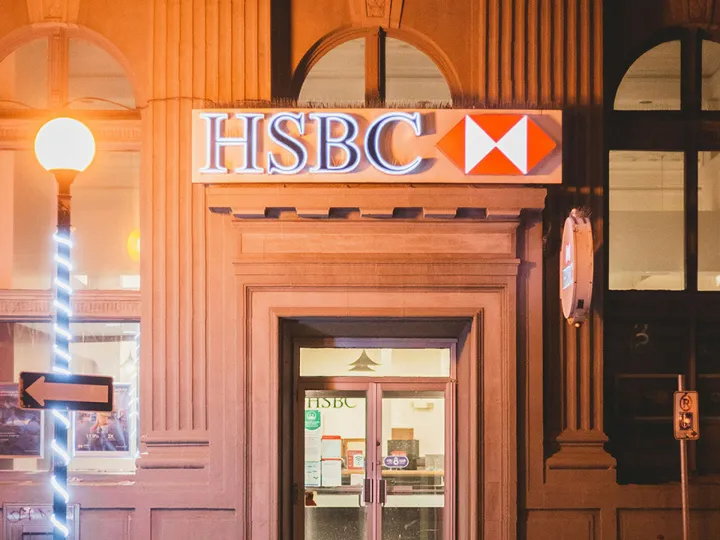
A recurring theme emerges in governance training at our Retail Banking Institute: major banking scandals often begin when a large bank acquires a smaller bank, and ends up inadvertently smuggling a fatal problem into its business. (Due diligence can only do so much to uncover wrongdoing by deeply embedded employees.) The money laundering scandal that engulfed HSBC in 2012 started in 2002 when it acquired Grupo Financiero Bital, at the time Mexico’s fifth largest bank. But Bital turned out to be the bank of choice for the Sinaloa cartel, familiar to many people as the cartel led by Joaquin ‘El Chapo’ Guzman. The cartel was a pioneer not only of innovative ways to smuggle drugs across borders, but also in laundering money.A small innovation? The cartel designed briefcases of the maximum dimensions that would still fit through teller windows, which they packed with dollars from US drug sales and pushed through the windows of the Mexican bank. In the end, HSBC paid a fine of $1.9 billion over the Mexican money laundering affair, and came close to losing its valuable US banking licence.
Danske Bank’s huge money laundering scandal – thought by some to be the biggest in history – started in 2007 when it acquired Finland’s Sampo Bank. The bank had a single branch in Tallinin in Estonia which had been compromised by a team of employees, who helped to channel an estimated $200 billion in Russian roubles from Russia and its former satellite states in the Baltic into Europe. About $8.7 billion were flagged as suspicious transactions. The scandal cost Danske Bank’s CEO his job, the bank’s share price halved, and the bank agreed to settle with the US Department of Justice and paid a $2 billion fine.
A major new money laundering story is emerging at HSBC over alleged looting at the Central Bank of Lebanon. For years, the Lebanese central bank had offered high returns to commercial banks to attract dollar deposits into the country, ending with a calamitous collapse in 2019, when banks froze access to funds and many people lost money. But there was a separate crisis involving the bank’s governor, his brother, and companies now accused of facilitating looting at the bank.
In the late 1990s, HSBC acquired Republic National Bank in New York. One of RNB’s bankers, Sobhi Tabbara, was a longtime acquaintance of Lebanese brothers Riad and Raja Salameh. Mr Tabbara then became a relationship manager with HBSC Geneva. The Salameh brothers were powerful and influential: Riad Salameh was governor of the Central Bank of Lebanon from 2003 until his ousting in 2023, while Raja Salameh was formerly head of the Beirut office of Republic National Bank. But signs emerged that the brothers appeared to be were benefiting hugely from their central bank connections.
The US Treasury sanctioned Riad Salameh in 2023, alleging that he abused his position to enrich himself and associates through shell companies and European real estate investments, and he was indicted by Lebanese prosecutors in January this year on charges of embezzlement, forgery and illicit enrichment. Riad Salameh has maintained his innocence, as has his brother Raja.
Then there was the separate matter of Forry Associates, a company administered by law firm Mossack Fonseca and controlled by Raja Salameh. HSBC Geneva opened an account for Forry Associates, and hundreds of millions began flowing through HSBC from Lebanon’s central bank. The money was supposed to be commission payments to Raja Salameh for work he did as a broker for the central bank. A HSBC compliance officer noted the flow and lack of detail in 2013, but the bank decided to maintain the account after Tabbara vouched for the legitimacy of the business. Swiss authorities have been investigating the brothers for years – as we noted before, Swiss investigations often drag on for a very long time – and in 2024 Finma criticised the bank for taking too long to report its suspicions. Now the French authorities have stepped in.
As the FT reports: “French prosecutors this month confirmed they had brought preliminary charges against HSBC’s Swiss Private Bank over allegations it helped Riad Salameh embezzle funds. A judge will later decide whether to take the matter to trial or dismiss the charges. Investigators allege that $330mn was transferred from the central bank – Banque du Liban – to Forry Associates between 2002 and 2015. They also traced 174 transactions from Forry Associates to Raja Salameh’s personal HSBC account in the period between 2009 and 2016, totalling $204mn, according to court documents and people familiar with the investigation.”
The bank has acknowledged that the current investigations have had a significant impact, and it has ended relationships with thousands of wealthy clients from Saudi Arabia and Lebanon. The central bank’s actions have earned it notoriety with the impact falling ultimately on the Lebanese population, in a country already caught between major international powers. As AP reported last year: “Lebanon’s crisis is rooted in decades of corruption by the country’s political and financial leaders that drained state resources and eventually led to a run on the banks in 2019 after which people have lost access to their deposits.”
Conversational AI has become infrastructure
Banking operating systems provider Backbase says it has acquired Kasisto, the company that was an early mover in developing banking chatbots. “Founded in 2013, Kasisto counts JPMorgan Chase, TD Bank and Westpac among the 47 clients for its banking-specific conversational AI,” says Finextra. Its investors include FIS, Mastercard and Westpac. “Backbase argues that, despite the hype, most banks have deployed agentic AI in isolated pockets – agents that answer questions without resolving work, leaving intent fragmented across channels, contact centres, and operations.”
The story of Kasisto is quite fascinating. Kasisto emerged from Stanford Research Institute (SRI), which was founded in 1946 and is responsible for the first mobile robot (1966), the computer mouse (1968), domain names (1970), internetworking (1976) and natural speech recognition (1996). Funded by DARPA in 2003 to produce a ‘soldier’s servant’, it came up with one of the first chatbots and spun it out of SRI in 2007 as a project it named SIRI. In 2010, Siri was acquired by Steve Jobs and Apple, and launched it in iPhone 4.
In 2013, SRI spun out another business called Kasisto, to develop a chatbot for the banking industry, and soon launched an AI assistant that it called KAI, which has been adopted by banks including JPMorgan and TD Bank in Canada. When DBS launched a digital bank, it used KAI as its main chat interface. When Lafferty Group talked to Tracy De Munoz at Kasisto as part of our research into AI projects a few years back, she told us: “Kasisto’s value proposition is in two areas. First, it’s customer care. It’s intuitive to see how KAI can triage a call centre call – which is a $4 call – asking something like ‘what’s my routing number’?” The second is a revenue-generating activity where it offers personalised and compelling experiences and thereby builds brand loyalty.” The arrival of new consumer-facing chatbots such as ChatGPT allowed Kasisto to integrate new functions into its own offerings, and its says that KAI-GPT is the first large language model purpose-built for banking.
Lafferty Group
Contact Us
enquiries@lafferty.com
caroline.hastings@lafferty.com
The Leeson Enterprise Centre
Altamont Street
Westport, Co. Mayo
Ireland
F28 ET85